You’re ready to check out on Temu, you hit “Pay”… and it fails.
No clear reason. No helpful error. Just frustration.
If your Temu payment failed, you’re not alone. This is one of the most common issues shoppers face, especially when using debit cards, virtual cards, or paying from outside major payment regions.
The good news?
Most payment failures are fixable in minutes; once you know what’s actually going wrong.
In this guide, you’ll learn:
- Why Temu payments fail (the real reasons)
- How to fix it quickly (step-by-step)
- What to do if nothing works
- Better ways to pay without repeated failures
Quick Answer: Why Your Temu Payment Failed
A Temu payment failed situation usually happens because your bank blocks the transaction, your card details are incorrect, or your payment method isn’t supported. It can also fail due to insufficient funds, network issues, or regional restrictions. Fixing it often requires adjusting your card settings or switching payment methods.
Fix Temu Payment Failed in Minutes
If you just want to get your payment through right now, start here:
Try These Quick Fixes
- Check your balance
Make sure you have enough funds, including small extra charges or currency conversion fees. - Enable international payments
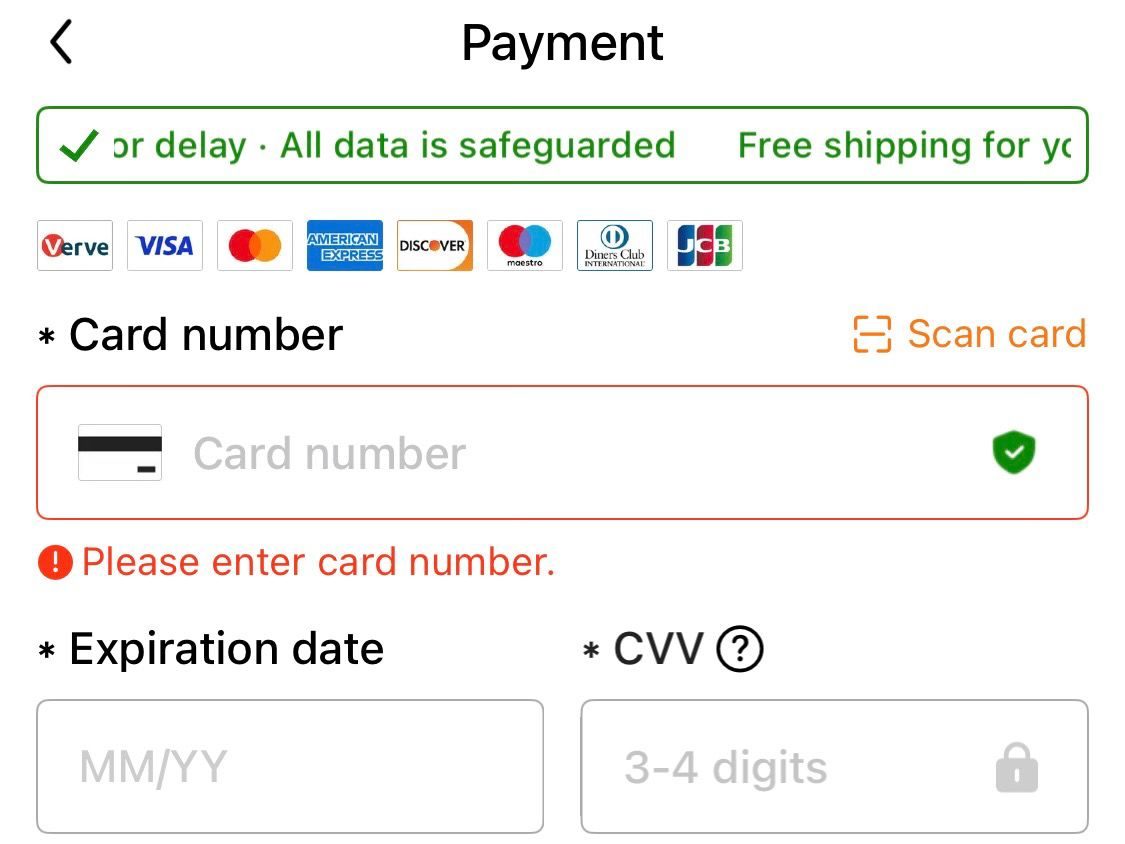
Many banks block foreign transactions by default; especially for debit cards. - Re-enter your card details
Double-check:- Card number
- Expiry date
- CVV
- Billing address
- Switch your network
Move from WiFi to mobile data (or vice versa). Payment gateways can fail on unstable connections. - Try another payment method
If your current card fails, use a different one or switch to another supported option. - Wait and retry
Sometimes banks temporarily block transactions. Waiting a few minutes can fix it.
Pro tip: Avoid retrying too many times quickly,as this can trigger fraud alerts and make things worse.
Why Temu Payment Failed (Full Breakdown)
If the quick fixes didn’t work, or you want to avoid this happening again, here’s what’s really going on behind the scenes.
1. Insufficient Funds or Spending Limits
This is the simplest (and most overlooked) cause.
Even if you have money in your account:
- You might hit a daily transaction limit
- Your bank may block international spending above a certain amount
- Currency conversion fees may push the total above your balance
Example: You have $50, but the final charge is $52 after fees → payment fails.
2. Bank Restrictions (The #1 Reason)
This is the most common cause of Temu payment failure, especially for users outside major payment markets.
Banks often:
- Block international transactions by default
- Flag unfamiliar merchants as suspicious
- Require manual approval for online payments
Real-world scenario:
You’re using a local debit card.
Your bank sees a foreign transaction from Temu and blocks it instantly, without notifying you clearly.
Result: Temu payment failed, even though your card works elsewhere.
3. Card Declined Errors
Sometimes the issue is with the card itself.
Common triggers:
- Expired card
- Incorrect CVV
- Wrong billing address
- Unsupported card type
Even a small mismatch can cause an automatic decline.
4. Network or System Issues
Not all failures are financial; some are technical.
These include:
- Weak internet connection
- Payment gateway timeouts
- App or browser glitches
If your connection drops mid-payment, the transaction may fail instantly.
5. Regional & Payment Limitations
Temu operates globally, but not all payment methods work equally everywhere.
Issues include:
- Certain cards not supported in your region
- Currency mismatches
- Payment systems not optimized for cross-border use
This is why a card that works locally may fail on Temu.
Advanced Scenarios Most Guides Miss
Most articles stop at “check your card.” But real users face more complex issues.
Let’s break them down.
1. Temu Payment Failed But Money Was Deducted
This is one of the most stressful situations.
Here’s what’s happening:
- The payment is marked as pending, not completed
- Your bank temporarily holds the funds
- Temu doesn’t receive the payment
What to do:
- Wait 24–72 hours (most refunds happen automatically)
- Check your bank statement for reversal
- Contact support only if the refund delays
Important: This is usually not a permanent charge.
Payment Failed First Time But Worked Later
This happens more often than you think.
Why?
- Banks sometimes flag first attempts as suspicious
- After retrying, the transaction is approved
- Temporary system issues get resolved
If it works later, the issue was likely temporary, not your card.
Why Temu Rejects Some Cards or Regions
Temu uses fraud detection systems to reduce risk.
This means:
- Certain cards are flagged as high-risk
- Some regions have stricter checks
- A few payment types are simply unsupported
Result: repeated payment failures, even when everything looks correct.
Troubleshooting: Why Did Your Temu Payment Fail?
Use this quick diagnostic guide:
- Card declined?
→ Enable international payments or contact your bank - Money deducted but order failed?
→ Wait for automatic refund (24–72 hours) - Error message showing?
→ Match it to the issue (card, network, or system) - Still failing after multiple tries?
→ Switch your payment method
At this point, you’ve either:
- Fixed your issue
- Or realized your current payment method just isn’t reliable
Payment Methods on Temu (What Works & What Doesn’t)
Not all payment methods behave the same on Temu. Some are reliable. Others fail more often, especially for cross-border transactions.
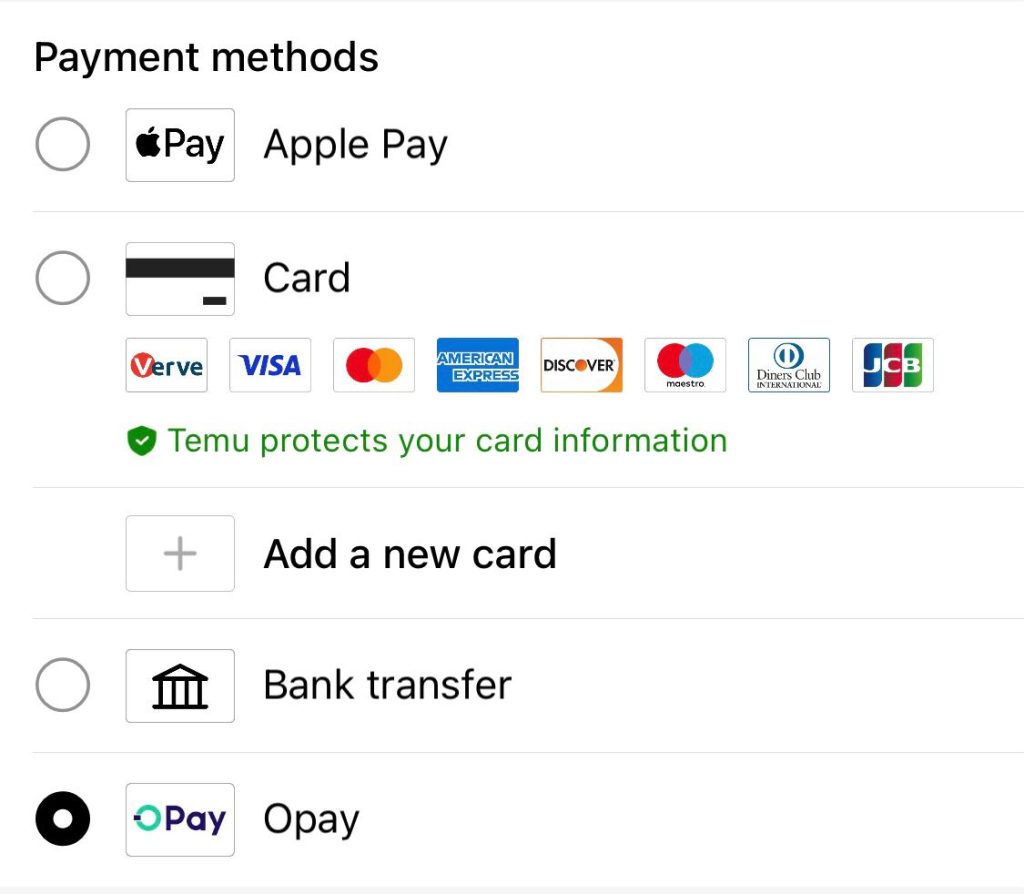
What Typically Works
- Debit/Credit Cards (Visa, Mastercard)
Widely accepted, but heavily dependent on your bank’s policies - Digital Wallets (where available)
Often smoother, but limited by region
What Can Be Unreliable
- Virtual Cards
Some work perfectly. Others get declined due to platform restrictions - Prepaid Cards
Frequently rejected due to verification limitations
What Often Fails
- Cards without international payment enabled
- Cards from unsupported regions
- Payment methods flagged by fraud systems
Bottom line: If your Temu payment failed, your payment method; not your account, is usually the issue.
Debit/Credit Card vs Virtual Cards vs Alternatives
Choosing the right payment method can save you from repeated failures.
Debit/Credit Cards
Pros:
- Widely accepted
- Easy to use
Cons:
- Bank restrictions
- High decline rates for international payments
Virtual Cards
Pros:
- Safer for online payments
- Useful for global transactions
Cons:
- May not always be accepted on Temu
- Can be flagged by payment systems
Alternative Payment Solutions
Pros:
- Designed for cross-border payments
- Higher success rates
- Fewer bank-related declines
Cons:
- Requires switching from traditional methods
If your Temu payment failed repeatedly, switching to a more reliable payment option is often the fastest fix.
What to Do If Temu Payment Keeps Failing
If you’ve tried everything and it still doesn’t work, don’t keep retrying blindly as that can make things worse.
Instead, do this:
- Switch cards completely
Don’t reuse the same one that failed - Avoid rapid retries
This can trigger fraud blocks - Use a payment method built for global transactions
Especially if you’re paying across borders
At this stage, the issue is no longer “fixable”, it’s about choosing a better route.
A Better Workaround: Pay Without Card Failures
Here’s the truth most guides won’t tell you:
Sometimes, your bank will keep blocking the transaction; no matter what you do.
That’s where a smarter approach comes in.
Instead of fighting your bank…
Use a solution designed for borderless payments.
EverTry helps you:
- Pay for global services without card restrictions
- Avoid repeated declines and hidden bank blocks
- Complete transactions smoothly, even when traditional methods fail
It’s not just a workaround, it’s a more reliable way to pay globally.
How to Avoid Temu Payment Failure Next Time
Once you’ve fixed the issue, here’s how to prevent it from happening again:
Best Practices
- Enable international transactions on your card
- Use payment methods that support cross-border payments
- Double-check your billing details before checkout
- Avoid unstable internet connections
- Don’t retry failed payments too many times
Small changes like these can dramatically reduce payment failures.
The 5 Layers of Payment Failure on Temu
To truly understand why a Temu payment failed, you need to look beyond just your card.
Here’s a simple framework:
1. User Layer
- Incorrect details
- Insufficient funds
2. Bank Layer
- Transaction blocks
- Fraud detection systems
3. Network Layer
- Connectivity issues
- Payment timeouts
4. Platform Layer
- Temu or gateway errors
5. Region Layer
- Geographic/payment limitations
If even one layer fails, your payment fails.
This is why switching methods often works faster than troubleshooting endlessly.
Frequently Asked Questions
1. Why does my Temu payment keep failing?
It’s usually due to bank restrictions, unsupported payment methods, or incorrect details.
2. Does Temu accept prepaid cards?
Some prepaid cards work, but many are declined due to verification issues.
3. Why is my card declined on Temu but works elsewhere?
Your bank may block international transactions or flag Temu as a high-risk merchant.
4. How long does a failed Temu payment refund take?
Typically 24–72 hours, depending on your bank.
5. Can I use a virtual card on Temu?
Yes, but success varies. Some virtual cards are declined by the platform.
If your Temu payment failed, it’s usually not random, it’s caused by bank restrictions, technical issues, or payment method limitations.
The fastest way to fix it:
- Try quick troubleshooting steps
- Understand the real cause
- Switch to a more reliable payment method if needed
And if your bank keeps getting in the way, it might be time to stop forcing it.
Try EverTry for smoother, stress-free global payments; no more repeated declines. Download for iOS and Android.
This article is for informational purposes only and does not constitute financial or legal advice. Payment outcomes may vary by bank, provider, or region. Always verify with your bank or payment provider before taking action. We are not liable for any losses arising from the use of this information.
Deborah Giwa is a Marketing Associate at EverTry, where she works on content and growth initiatives focused on helping users navigate international payments. She is passionate about simplifying access to global financial tools for people in emerging markets through clear, practical, and user-focused content.