If you’re looking for the best AliExpress alternatives in 2026, here are the top picks by use case: CJ Dropshipping for the widest all-around replacement (free, multi-region warehouses), Zendrop for the simplest beginner setup if your customers are mostly in the US, and Spocket if you sell almost exclusively to the US or EU and want the fastest regional shipping. Below, we compare all 15 real options by shipping speed, pricing, and reliability, then help you match one to your specific business.
Why Dropshippers Are Leaving AliExpress in 2026
AliExpress is still one of the easiest ways to start a store with zero inventory: browse, import, mark up, sell. But by 2026, a lot of experienced sellers have hit a ceiling with it. Long shipping windows frustrate customers, product quality swings from one supplier to the next, and the cost math that made cheap China-direct shipping work has changed. Here’s what’s actually driving the shift.
Shipping delays are hurting customer experience
Standard AliExpress shipping from China still averages two to six weeks for many products, and that gap is now measured against customer expectations set by same-week delivery everywhere else. Every extra week in transit means more “where is my order?” messages, more chargebacks, and more refunds you eat out of your margin.
The end of the US de minimis exemption changed the cost math
In July 2025, an executive order eliminated duty-free entry for shipments valued at $800 or less into the United States: first for China and Hong Kong, effective May 2, 2025, then for every other country of origin, effective August 29, 2025. If you’re dropshipping to US customers, the days of a cheap parcel from China clearing customs untaxed are over. A supplier warehoused inside the customer’s own country now avoids that per-package tariff hit entirely, which is exactly why locally-warehoused alternatives have become more valuable almost overnight.
Product quality and dispute resolution remain inconsistent
AliExpress is an open marketplace of thousands of independent sellers, so quality control depends entirely on who you happen to source from. Dispute and refund processes can also drag on for weeks, which is fine if it happens once a month, but a real margin leak once you’re processing dozens of orders a day.
Marketplace rules have gotten stricter
Tighter policies around listings, sourcing verification, and seller ratings have made AliExpress less forgiving for sellers who want to move fast and test products quickly, pushing more of that testing workflow onto purpose-built dropshipping platforms instead.
Key takeaway: The shift in 2026 isn’t about finding the cheapest supplier anymore: it’s about finding the lowest landed cost and the most reliable delivery, which usually means a platform with real warehouse infrastructure, not just the biggest catalog.
How We Evaluated Every AliExpress Alternative
Every platform below was assessed against the same eight criteria, so the comparisons aren’t just marketing copy repeated from each company’s homepage:
- Shipping speed: realistic delivery windows, not best-case marketing numbers
- Warehouse locations: where stock actually sits, since that determines both speed and tariff exposure
- Supplier reliability: vetting process, dispute handling, and return policy
- Pricing: subscription cost plus product markup, not just the advertised “free” tier
- Automation: how much of order fulfillment happens without manual work
- Store integrations: Shopify, WooCommerce, and other platform compatibility
- Customer reviews: sentiment from Trustpilot, the Shopify App Store, and Reddit
- Ease of setup: time from signup to first listed product
Quick Comparison: The 15 Best AliExpress Alternatives at a Glance
| Platform | Best For | Pricing | Shipping | Automation Level |
|---|---|---|---|---|
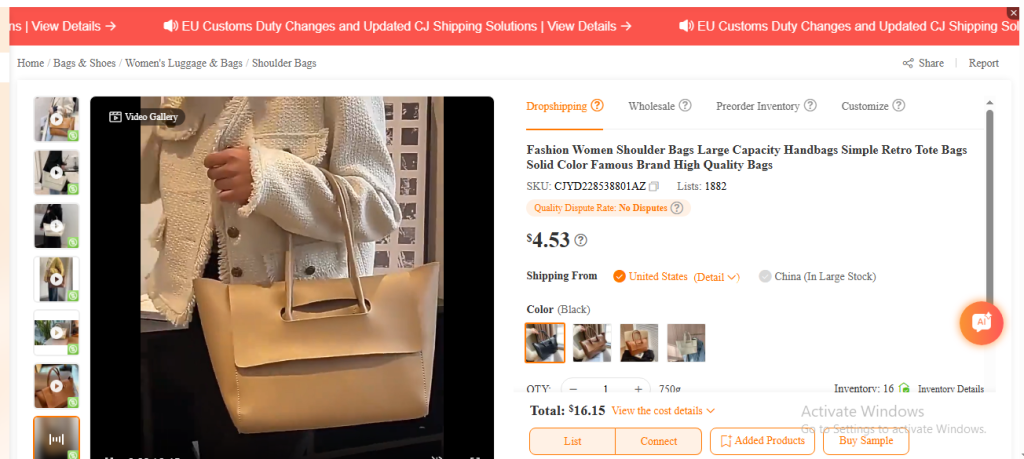
| CJ Dropshipping | All-in-one sourcing + fulfillment | Free, product markup only | 7–15 days (varies by warehouse) | Moderate: manual coordination |
| Zendrop | Beginners targeting the US | Free tier; paid from ~$49/mo | 3–7 days from US 3PL | High on paid tier |
| EPROLO | Zero-subscription branding | Free, product markup only | 7–15 days | Moderate |
| AutoDS | Multi-supplier automation | From ~$1 trial, then tiered | Depends on the connected supplier | Very high |
| Spocket | Fast US/EU-only shipping | From $39.99/mo | 2–7 days | Moderate |
| DropCommerce | North American suppliers | Free tier available | 2–7 days in North America | Moderate |
| Shopify Collective | Existing Shopify sellers | Free with Shopify subscription | Varies by brand | High |
| Wholesale2B | US/Canada catalog depth | From ~$29.99/mo | Varies, mostly US/Canada | Moderate |
| Banggood | Electronics and gadgets | Free to join, product cost only | 5–18 days, depending on the warehouse | Low: manual sourcing |
| DHgate | Bulk/wholesale pricing | Free, product cost only | 7–20 days | Low |
| Temu | Cheap product testing only | Retail price, no wholesale tier | 7–15 days | None: fully manual |
| Gearbest | Electronics deals | Free, product cost only | 1–18 days depending on the method | Low |
| DSers | AliExpress bulk order automation | Free up to 3,000 products; then ~$19.90/mo | Same as AliExpress | High for AliExpress orders |
| Syncee | Global vetted brand catalog | Free tier available | Varies by supplier region | Moderate |
| SaleHoo | Supplier directory research | $67/yr or $127 lifetime | Depends on chosen supplier | None: directory only |
Best Full-Service AliExpress Alternatives
These platforms handle sourcing, warehousing, and fulfillment together, making them the closest like-for-like replacement for how you already use AliExpress.
CJ Dropshipping
Overview: CJ Dropshipping combines product sourcing, warehousing in the US, Europe, and Asia, quality inspection, and print-on-demand into one platform, with no subscription fee. Pros: Free to join; warehouses across several regions reduce per-package tariff exposure; strong custom branding and sourcing-request tools. Cons: Manual logistics coordination compared to fully automated tools; steeper learning curve on the dashboard. Pricing: Free; you pay product cost plus shipping. Shipping: Roughly 7–15 days, depending on the warehouse. Best for: Sellers who want AliExpress-level product variety with better fulfillment infrastructure. Expert verdict: The strongest single replacement for AliExpress if you’re not ready to commit to a paid platform yet.
Zendrop
Overview: Zendrop works directly with vetted manufacturers and offers US third-party logistics for faster domestic shipping to American customers, plus a guided Shopify store-builder for beginners. Pros: Fast US shipping; strong live-chat support; beginner-friendly onboarding. Cons: Meaningful automation and faster shipping are locked behind the ~$49/month tier; the free plan is limited. Pricing: Free forever plan; paid plans start around $49/month. Shipping: 3–7 days from US-based fulfillment. Best for: Beginners whose customers are mostly in the US. Expert verdict: Excellent if your audience is American; less useful if you’re selling regionally or locally.
EPROLO
Overview: EPROLO is a genuinely free dropshipping and fulfillment platform, sourcing from its own warehouses in the US, UK, EU, and China, with no monthly subscription. Pros: No subscription fee; solid print-on-demand and branding tools with no minimum order quantity. Cons: Smaller supplier network than CJ; limited advanced automation. Pricing: Free; monetizes through a small markup on product cost. Shipping: 7–15 days, depending on the warehouse. Best for: Sellers who want to test the waters without any subscription risk. Expert verdict: The lowest-friction starting point if you want to try an alternative before committing to a paid platform.
AutoDS
Overview: AutoDS is an automation layer that connects to 25+ suppliers, including AliExpress, Amazon, Walmart, and CJ Dropshipping, handling price monitoring, stock syncing, and order fulfillment centrally. Pros: Deep automation reduces manual order processing and consolidates multiple suppliers in one dashboard. Cons: Shipping speed still depends entirely on whichever underlying supplier you connect; can feel complex for a first-time seller. Pricing: Trials from around $1, then tiered monthly plans. Shipping: Varies by connected supplier. Best for: Sellers managing multiple suppliers who want one automated dashboard. Expert verdict: Worth it once you’re scaling past a single supplier relationship, not for a first store.
Best US & EU Supplier Networks
These platforms make sense if most of your customers are in the US or EU and you’re willing to pay more per unit for dramatically faster, more reliable shipping. They make far less sense if your customer base is local or pan-regional, since the entire value proposition is regional proximity.
Spocket
Overview: Spocket vets its supplier network to guarantee 2–7 day shipping across the US, EU, Canada, and Australia, with branded invoicing for a more professional unboxing experience. Pros: Genuinely fast regional shipping; higher-quality, vetted suppliers. Cons: Premium suppliers and branded invoicing are locked behind paid tiers starting at $39.99/month; smaller catalog than China-based platforms. Pricing: From $39.99/month. Shipping: 2–7 days. Best for: Sellers targeting exclusively US or EU customers who can absorb the monthly cost. Expert verdict: Skip this if you’re not selling to Western markets: the pricing only makes sense against that shipping speed.
DropCommerce
Overview: DropCommerce connects sellers with over 400 vetted US and Canadian suppliers, offering a minimum 30% retailer margin and branded invoicing. Pros: Free entry plan; responsive support; organic and fair-trade product options. Cons: North America-only shipping footprint; some users report unclear billing after trial cancellation, so read the terms before signing up. Pricing: Free plan available; paid tiers for expanded catalog access. Shipping: 2–7 days within North America. Best for: Sellers focused entirely on US and Canadian customers. Expert verdict: Solid niche pick, but only if your market is strictly North American.
Shopify Collective
Overview: Shopify Collective is Shopify’s own built-in supplier network, letting merchants source products directly from other verified Shopify brands with real-time inventory sync and automated payments. Pros: Free for eligible Shopify merchants; no intermediary platform; typical margins of 20–50%. Cons: Requires an active Shopify subscription; catalog depends on which brands are participating in your category. Pricing: Free with a Shopify plan. Shipping: Varies by partner brand. Best for: Existing Shopify sellers who want quality over quantity. Expert verdict: Worth exploring once your store is already live on Shopify, not a starting point on its own.
Wholesale2B
Overview: Wholesale2B gives sellers access to over a million products from 100+ US and Canada-based suppliers, with built-in integrations for Shopify, eBay, and Amazon. Pros: Large catalog depth; direct marketplace integrations beyond just Shopify. Cons: Monthly fee starting around $29.99 regardless of order volume; interface feels dated next to newer platforms. Pricing: From $29.99/month. Shipping: Varies, mostly US and Canada. Best for: Sellers who want one supplier account feeding multiple sales channels. Expert verdict: A reasonable multi-channel option once you’re ready to commit to a paid plan.
Best Wholesale & Marketplace Alternatives
These are flexible sourcing options for sellers who don’t necessarily need advanced automation and are comfortable doing more of the sourcing work manually.
Banggood
Overview: Banggood runs an official dropshipping program with 5–12% off retail pricing and a dedicated agent, sourcing heavily from electronics, RC, and smart home categories, with warehouses in the US, EU, UK, and Australia. Pros: Genuine warehouse-based fast shipping on flagged SKUs; strong in gadget and tool niches. Cons: The same product can silently ship from China once regional warehouse stock runs out, so shipping times aren’t always what the listing implies. Pricing: Free to join, product cost only. Shipping: 5–9 days from warehouse stock, up to 18 days from China. Best for: Electronics and gadget-focused stores. Expert verdict: Strong niche pick if you confirm warehouse origin on each SKU before scaling it.
DHgate
Overview: DHgate is a long-running B2B marketplace connecting buyers to Chinese manufacturers and wholesalers directly, leaning into bulk pricing rather than one-off retail purchases. Pros: Deep wholesale discounts at volume; built-in dispute resolution and buyer protection. Cons: No native dropshipping automation; quality varies by seller, similar to AliExpress. Pricing: Free; product cost only. Shipping: 7–20 days typically. Best for: Sellers who want to buy in bulk rather than order by order. Expert verdict: Better for scaling a proven product than for testing new ones.
Temu
Overview: Temu is a retail platform, not a dropshipping supplier: it has no API, no automated fulfillment, and no reseller program, so every order has to be placed and shipped manually. Pros: Extremely low prices; useful for spotting trending products before committing elsewhere. Cons: Every order ships in Temu’s distinctive orange branded packaging, which undermines your own branding, and the end of the US de minimis exemption has made the underlying cost math tighter than it was a year ago. Pricing: Retail price, no wholesale discount. Shipping: 7–15 days. Best for: Product research and demand testing only. Expert verdict: Use it to spot what’s trending, not to run your actual fulfillment.
Gearbest
Overview: Gearbest is an online retailer known for competitive pricing and frequent flash sales, with some warehousing in the US that speeds up delivery on select items. Pros: Aggressive pricing on electronics; frequent deal events useful for margin. Cons: Not purpose-built for dropshipping; no dedicated automation tools. Pricing: Free, product cost only. Shipping: 1–18 days depending on method and warehouse. Best for: Electronics and gadget resellers chasing flash-sale margins. Expert verdict: A useful secondary source, not a primary one.
Best Dropshipping Automation Platforms
These tools work best for sellers who already have a supplier relationship and want to automate the operational side rather than replace their sourcing entirely.
DSers
Overview: DSers automates bulk order placement specifically for AliExpress sourcing, letting you process hundreds of orders at once and find better-priced suppliers through its optimization feature. Pros: Free for basic use; genuinely saves time on high-volume AliExpress orders. Cons: Tied to AliExpress, so it inherits all of AliExpress’s shipping and quality limitations. Pricing: Free up to 3,000 products, then roughly $19.90/month. Shipping: Same as AliExpress. Best for: Sellers who still trust AliExpress’s catalog but want faster order processing. Expert verdict: A smart bridge tool, not a full replacement.
Syncee
Overview: Syncee is a global dropshipping and wholesale marketplace connecting retailers with 12,000+ vetted brands across the US, Canada, UK, EU, and beyond, with a collective model that also lets stores sell to each other. Pros: Genuinely global supplier reach; free tier available; strong reported customer support. Cons: Product variety and shipping speed both depend heavily on which individual supplier you pick within the marketplace. Pricing: Free tier available; premium tiers unlock more suppliers. Shipping: Varies by supplier region. Best for: Sellers who want international supplier variety in one dashboard. Expert verdict: Worth testing on the free tier before committing to premium.
SaleHoo
Overview: SaleHoo is a supplier directory rather than a fulfillment platform: a vetted database of dropshippers, wholesalers, and manufacturers you search and contact directly, some with Shopify integrations and some requiring manual order management. Pros: Wide supplier variety across niches; one-time payment rather than a recurring subscription; 7-day $1 trial. Cons: You still need to vet individual suppliers yourself; no built-in automation. Pricing: $67/year or $127 lifetime. Shipping: Depends entirely on the supplier you choose from the directory. Best for: Sellers who want to research and hand-pick suppliers rather than use a pre-built catalog. Expert verdict: Good research tool if you’re willing to do your own supplier vetting.
Which AliExpress Alternative Should You Choose?
If you’re just starting out
EPROLO or DSers: no subscription risk while you validate your first products.
If you have a limited budget
CJ Dropshipping or EPROLO: both are free beyond product cost.
If you sell mainly to US customers
Zendrop or Spocket, for the domestic shipping speed.
If you sell locally or regionally
CJ Dropshipping or Banggood, which don’t assume a US-only customer base.
If you want the fastest shipping
Spocket or DropCommerce, if your customers are in the US or EU.
If you don’t want a monthly subscription
CJ Dropshipping, EPROLO, DHgate, or Gearbest.
If you’re ready to scale and automate
AutoDS, once you’ve outgrown a single-supplier setup.
Frequently Asked Questions
What is the best alternative to AliExpress?
There isn’t one universal winner. CJ Dropshipping is the strongest all-round pick for sellers who want free onboarding and warehouses across several regions. Zendrop is the easiest for beginners targeting US customers. Spocket is best if your customers are entirely in the US or EU and you can absorb its subscription cost.
Which AliExpress alternative is best for beginners?
Zendrop and EPROLO are the most beginner-friendly. Zendrop offers a guided store setup and a free forever plan with basic automation, while EPROLO has no subscription fee at all, which matters when you’re still validating a product idea.
Which supplier has no monthly fee?
CJ Dropshipping, EPROLO, and DSers (on its free tier, up to a product limit) charge no subscription fee. You still pay for the product and shipping cost per order.
Do I need a US business to use these platforms?
No. None of the platforms in this guide require a US-registered business to open a seller account. A few, like Shopify Collective, simply require an active Shopify subscription rather than a specific business location.
Can I use Shopify from Nigeria?
Yes. Shopify accepts merchants signing up from Nigeria and across the Global South, with the same store-building and app ecosystem available anywhere else.
Why do international card payments sometimes fail on these platforms?
Most declines happen because a card isn’t enabled for international transactions, the bank has flagged the merchant, or the spending limit is too low. A quick call to your bank to confirm international/USD transactions are enabled usually resolves it.
Conclusion
There’s no single “best” AliExpress alternative in 2026, only the one that fits how you actually sell. If you want the closest all-round replacement, CJ Dropshipping gives you free, multi-region fulfillment without a subscription. If you’d rather test the waters with zero risk, EPROLO’s forever-free plan is the easiest entry point. Beginners building for a US audience will get more out of Zendrop’s guided setup, while sellers who’ve outgrown a single supplier and want everything automated should look at AutoDS. If your store already lives on Shopify, Shopify Collective is worth a look before you add another tool to your stack.
Whichever platform you land on, the same rule applies: test with a small order before you migrate your whole catalog. Shipping times, product quality, and support responsiveness all vary more in practice than any comparison table can fully capture, including this one.
One more thing worth planning for: if you run into payment issues paying a supplier’s subscription or product fees from your location, a virtual USD card is usually the simplest fix, since it removes the currency mismatch and international-transaction flags that cause most declines.
Pricing, shipping windows, and platform features referenced in this article were accurate at the time of publication and may change without notice. This content is for informational purposes only and does not constitute business, legal, or financial advice. Always confirm current terms directly with each platform before making a purchase or business decision.
Jamilah is a digital marketer focused on fintech growth, SEO, and user acquisition.
She works on content and campaigns that help users navigate cross-border payments more easily.
At EverTry, she supports marketing initiatives aimed at making global payments simpler and more accessible.